
Breaking the Cycle: How Feedback Loops Shape Humanitarian Work
In 1970, MIT professor Jay Forrester made a startling observation about urban poverty programs: many well-intentioned interventions were actually making the problems they sought to solve worse. Housing programs designed to help the poor were concentrating poverty and creating urban decay. Job training programs were pulling the most capable people out of struggling communities, weakening them further. Good intentions weren't enough—the systems themselves were creating cycles that perpetuated the very problems they aimed to fix.
Forrester had discovered what systems theorists call “feedback loops”: the cyclical relationships where inputs of a system generate outputs which in turn affect the inputs, creating dynamic patterns that can either stabilize or destabilize the whole system over time. Understanding these loops, he argued, was crucial for anyone trying to create lasting change in complex environments.
Nowhere is this insight more relevant today than in humanitarian work, where well-intentioned interventions regularly create unintended consequences that ripple through communities for years.
Understanding Feedback Loops
A quick semantic clarification: “Feedback” is correctly used to describe how outputs may influence how an organization decides to design their input. “Feedback loops” as used in this context, however, are fundamental mechanisms where the results of an intervention amplify or mitigate the impact based on the context of the problem.
There are two primary types of feedback loops that shape how systems behave:
“Systems are an important piece of context that may amplify (positive feedback loop) or mitigate (negative feedback loop) the efforts of the organization to address humanitarian needs.”
Negative feedback loops serve to stabilize systems. Consider, for example, a thermostat. When a room gets too hot, the thermostat turns on air conditioning to counteract the temperature and bring it back to a comfortable state. When something pushes the system away from its desired state, the feedback mechanism pushes back, maintaining equilibrium. Important note, “negative” in this context does not necessarily mean “bad,” but rather that inputs lead to outputs which reduce the likelihood of further inputs, resulting in renewed balance. In the animal kingdom, a decrease in prey will lead to a decrease in predators for lack of a food source. This allows for an increase in prey population thereby re-stabilizing the relationship.
In humanitarian work, this could be either good or bad. For example, a negative feedback loop could be a sign that a destabilized region has been restabilized, or it could be a sign that a desired change is more intractable than expected. More on this to come.
Positive feedback loops, on the other hand, serve to amplify an effect. Consider, for example, a microphone placed too close to a speaker. The sound from the speaker enters the microphone, which sends the signal out through the speaker, further increasing the sound entering the microphone. Again, “positive” here does not necessarily mean “good,” but rather that inputs lead to outputs which increase the likelihood of further inputs. Instead of seeking balance, they accelerate the system away from its starting point. In financial markets, panic selling can trigger more panic selling as prices drop, creating the kind of crashes that seem to come out of nowhere.
Again, in humanitarian work, this can be either beneficial or catastrophic, as both the compounding benefits of a small community investment and the vicious spiral of aid dependency are examples of positive feedback loops.
The power of understanding feedback loops lies in the ability to see and even create impacts that extend far beyond individual components alone. Small initial changes can cascade into large systemic effects through repeated cycling, making feedback loops central to understanding why complex systems often behave counterintuitively. To understand these interactions, the following sections will outline the virtuous and vicious cycles that can occur in both positive and negative feedback loops.
Positive Feedback Loops: Virtuous and Vicious
Education and Capacity Building Cycles
Educational programs represent a virtuous positive feedback loop, particularly when applied to girls and women. Greater provision of education leads to more educated girls and women. In addition to better health outcomes and higher incomes, they're more likely to educate their own children and participate in community decision-making, creating generational improvements that multiply over time.
In Bangladesh, programs that kept girls in school longer had cascading effects throughout communities. Educated girls delayed marriage and childbearing until womanhood, had healthier families, and became more economically active. Their success inspired other families to invest in girls' education, creating community-wide cultural shifts that reinforced the value of education for all children.
Capacity building programs create positive feedback loops by systematically transferring skills and decision-making power to local communities. As humanitarian organizations train local staff, support community-led initiatives, and build institutional knowledge, communities develop the expertise to identify and solve their own problems. This reduces their reliance on external technical assistance and management and amplifies their own capacity. Like a teacher working toward making themselves unnecessary, successful capacity building creates a self-correcting cycle where increased local competence leads to decreased need for outside support.
Partners in Health's approach in Rwanda after the 1994 genocide demonstrates this principle. Rather than maintaining permanent foreign medical staff, PIH focused intensively on training Rwandan healthcare workers at every level—from community health workers to specialists. They established medical training programs, mentorship systems, and gradually transferred hospital management to local staff. As Rwandan doctors and nurses gained expertise and confidence, PIH systematically reduced its foreign personnel and handed over operational control. By 2020, what began as an emergency intervention run by international staff had become a locally-managed healthcare system led entirely by Rwandan professionals. Their increased independence from international help increased their ability to train locally thus compounding the effectiveness of the intervention.
Too Much of a Good Thing? Dependency Traps and Market Destruction
One of the most thoroughly-documented vicious cycles that represents the dangers of positive feedback loops is the creation of aid dependency. When communities receive consistent external assistance without building local capacity, they may become less likely to develop their own solutions. This decreased self-reliance then justifies continued aid, creating a cycle where communities remain vulnerable and dependent on external support—an amplification of the problem.

Consider, for example, long-term food aid programs that have operated in parts of sub-Saharan Africa for decades. While addressing immediate hunger, these programs can create situations where communities stop investing in local agriculture, knowing that food will continue to arrive from outside. Local farming skills atrophy, agricultural infrastructure deteriorates, and communities become increasingly dependent on external support—making them more vulnerable to future crises, not less.
Additionally, humanitarian interventions can inadvertently destroy the very systems communities need for long-term resilience. When organizations distribute free goods to address immediate needs, they can devastate local markets by flooding communities with products that local businesses can't compete with.
After the 2010 Haiti earthquake, for example, massive clothing donations flooded the country. While addressing immediate needs, these donations destroyed Haiti's textile industry, which had employed thousands of people. Local clothing manufacturers couldn't compete with free imports, leading to factory closures and job losses. This amplified community dependency on continued aid while simultaneously weakening their economic foundation for recovery.
Negative Feedback Loops: Virtuous and Vicious
Manufacturing a Feedback loop
Negative feedback loops constrain change, giving them the potential to re-stabilize social, political, and economic systems and otherwise protect systems from upheaval. Even while they may be operating in the background, humanitarian practitioners may rarely consider them, given that humanitarian aid is generally designed to generate change, not maintain status the quo. However, humanitarian organizations may deliberately design negative feedback loops to create self-stabilizing systems that reduce long-term dependency.
Consider a water well built by an outside organization for a rural village. Without careful design, this intervention may create a dependency cycle: with increased use, the well is more likely to break down. When it does so, the community may expect the outside organization to return with funding and expertise for repairs, creating ongoing reliance on external support. However, a well-designed negative feedback loop can transform this dynamic entirely.
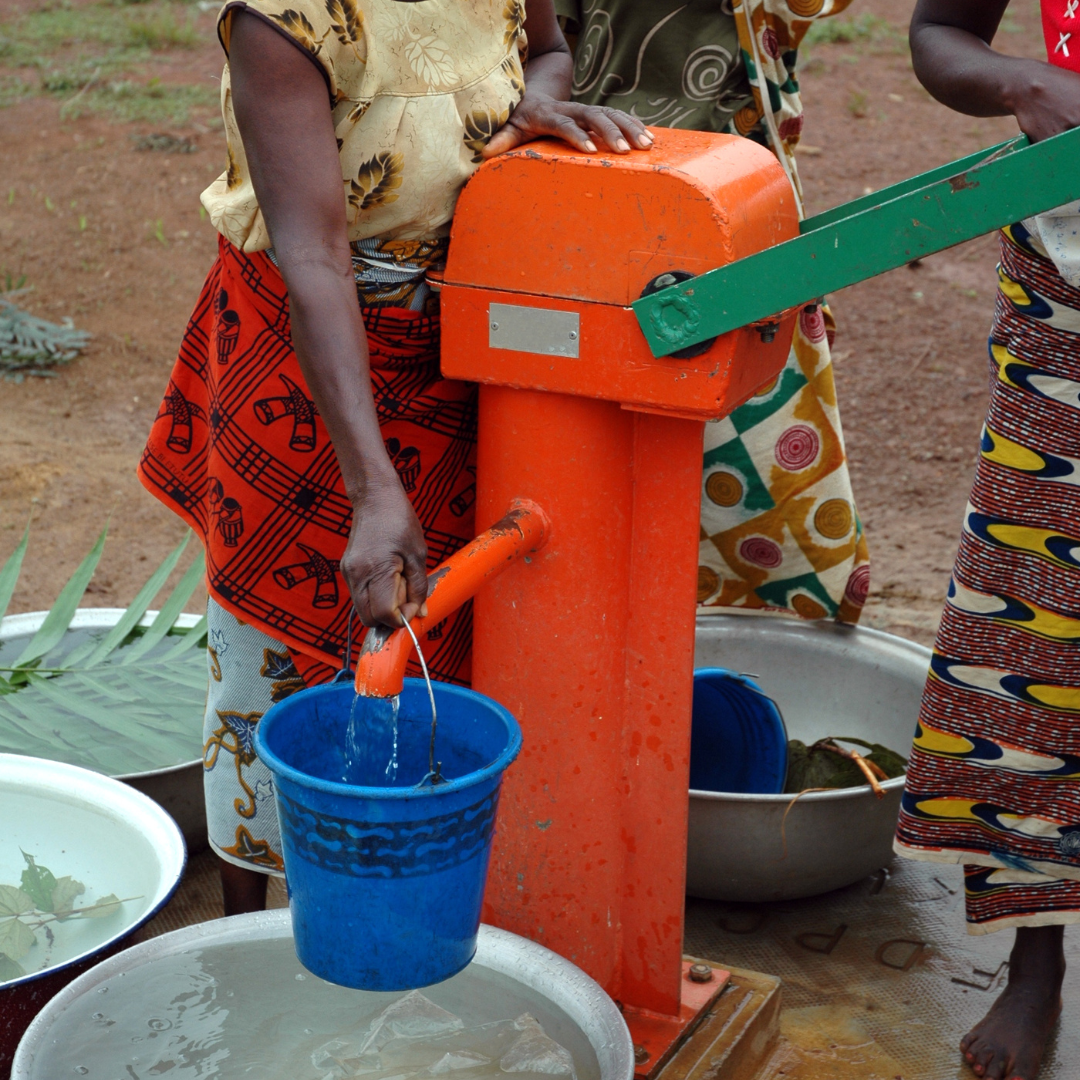
Here's how the stabilizing, negative loop works: The community treats the well as a communal resource where every household pays a small usage-based fee into a community fund. As usage goes up (and therefore the likelihood of needed repairs), so does the fund. If the well breaks down from overuse, the community can use these funds for repairs, thereby restoring water access quickly. As the well returns to reliable operation, fee collection resumes and the fund rebuilds for future needs.
Capacity Building Mitigator
One of the vicious results of a negative feedback loop occurs most often when the input does not account for the contextual factors. Following the Taliban takeover in Afghanistan, multiple organizations simultaneously launched tailoring and sewing programs to promote women's economic empowerment. While initial graduates found success in a market hungry for locally-made clothing, the programs' very effectiveness triggered a destructive cycle. As more NGOs scaled up similar training, thousands of women entered the same narrow market segment, causing fierce competition that drove wages down to unsustainable levels thereby mitigating their economic growth. Organizations responded to this market saturation by reducing enrollment—a logical negative feedback response designed to balance supply and demand. However, this created a vicious cycle where the market remained artificially constrained and underdeveloped. Instead of diversifying into related industries or developing higher-value skills, the system locked women into competing for scarce, low-paying seamstress positions. The negative feedback loop that was supposed to create market equilibrium instead trapped the entire sector in a low-opportunity equilibrium, preventing the economic growth and diversification that could have supported sustainable livelihoods. This demonstrates how negative feedback loops, while appearing rational and self-correcting, can become detrimental when they prevent systems from reaching their full potential, creating vicious cycles of limitation rather than virtuous cycles of growth.
Leveraging Context to Build More Effective Cycles
Understanding how to build an effective feedback loop requires understanding the context of the problem (i.e., how outside factors may impact the way inputs and outputs interact with each other). By designing interventions within the larger context, communities can become stronger and more resilient over time.
Build Local Ownership from Day One
Successful humanitarian programs increasingly focus on transferring ownership to local communities as quickly as possible. This means training local staff, working through existing community structures, and gradually shifting decision-making authority to local leaders. The goal is to create productive negative feedback loops where communities become stronger and more self-reliant over time.
Support Systems, Not Just Individuals
Rather than focusing solely on individual beneficiaries, effective programs consider how interventions affect broader systems. This might mean supporting local markets rather than bypassing them, strengthening local institutions rather than replacing them, and building on existing social networks rather than creating parallel structures. Systems are an important piece of context that may amplify (positive feedback loop) or mitigate (negative feedback loop) the efforts of the organization to address humanitarian needs.
Design for Adaptability
Recognizing that the dynamic social contexts may impact feedback loops, successful humanitarian programs must build in regular monitoring and adjustment mechanisms. This allows organizations to identify emerging feedback loops early and modify their approaches to maximize beneficial cycles while minimizing destructive ones.
Think in Multiple Time Horizons
Effective humanitarian work requires balancing immediate needs with long-term systemic effects. This means asking difficult questions: Will this intervention strengthen or weaken local capacity? How might this program affect local markets and institutions? What behaviors are we inadvertently incentivizing?
The Socio Take:
Feedback loops create powerful chain reactions where small changes can produce massive, unexpected results through either mitigation or amplification. What makes them particularly important is that these effects emerge as a result of system components interacting one another in complex ways—you can't predict them just by studying individual parts in isolation.
Here's the crucial point: feedback loops happen whether we plan for them or not. They arise from the complex web of social, economic, and political factors surrounding any humanitarian intervention. A food distribution program, for example, doesn't just feed people—it interacts with local markets, community power structures, and cultural norms in ways that can either strengthen or undermine long-term food security. Since humanitarian organizations cannot typically control these broader contextual factors—the local politics, economic conditions, social tensions, and cultural dynamics—they must instead understand how their interventions will interact with these existing forces. The goal is to design programs that work within the positive and negative feedback loops rather than against them, creating virtuous cycles that build community resilience instead of vicious ones that increase dependency.
Understanding context is critical, because the same intervention can produce completely different outcomes depending on the feedback loops it triggers within different social and economic environments.
