
The Professional Context Crisis
The following post was guest-authored by our friends at Trauma-Informed Utah. We highly recommend learning about and supporting them in any way you can.

Why Workplace Solutions Fail When We Ignore the Whole Person
It's Tuesday morning, you’re walking into the office. You pause the morning news podcast that just reported on the huge windstorm that came through the city overnight. Trees were uprooted, and several cars were smashed by falling limbs. Luckily, no one was hurt, but it seems these storms are happening more often these days...
You settle in and start your workday, saying hello to your coworker Randy.
Randy seems irritable, there are some days you know to walk on eggshells with him, but in general he’s a great part of the team. Today, Randy is particularly distracted, unable to focus on the tasks at hand. He is short with everyone, and when an afternoon meeting is changed at the last minute, his attitude reaches a fever pitch, and he yells at his supervisor, Lisa. The rest of the day, Lisa seems checked out - in her office with the door closed.
At the end of the day, you feel frustrated and stressed, and you can’t help but think, “What the heck is wrong with Randy and, for that matter, Lisa?”
What’s going on?
As human beings, we all experience stress. Some levels of stress are good and push us to think creatively or channel our physical energy. However, some adversities can leave us feeling overwhelmed and out of control - disrupting our sense of safety and ability to cope. The range of challenging, stressful life events is vast: being rejected by our first crush, cyberbullying, the death of a loved one, emotional neglect, physical abuse, natural disasters, pandemics, financial instability, injury, and terminal illness. Each person experiences such events differently depending on their previous or current life circumstances.
Whether it is in a school, work, or family setting, we bring our whole selves - our past and our present. We encounter people every day whose behavior is confusing, frustrating, annoying, or just "bad.” It is easy to label behaviors and make judgments about a person's motivations and intentions. But what if we could step back for a moment and, before moving into judgment, get curious? To wonder what might be going on? To do that, we have to understand more about the links between stressful life experiences (both past and present) and behaviors we see in the classroom, workplace, and even in ourselves. But how do we “get curious” when we see a behavior or reaction that feels way out of proportion or just out of line?
Understanding the impact
First, we have to appreciate how amazing the human brain is at keeping us safe and alive. Everything we have experienced as recorded through our senses of sight, hearing, taste, smell, and touch forms a unique record that informs our perceptions of the world. For example, the smell of bread baking might bring comfort, as that aroma always accompanied special family gatherings. Conversely, the sound of screeching tires causes a person’s heart to beat faster, hands to shake and rapid breathing. Why? That is what the person heard when they were in a bad car accident. Our brain is very good at keeping us alive, and that survival instinct, the stress response system, the fight, flight or freeze response, can take over when it feels threatened. Even when the feeling of threat is produced by a memory or experience. Understanding this relationship between life experiences and our physical and cognitive responses is what it means to be “trauma-informed.”
So let’s go back to Randy - why was he so on edge that day? Five years ago, Randy lived in Florida. While there, he rode out several hurricanes. The last one, the one that made him leave the state, destroyed his home, and he lost two dear pets in the storm. Whether he recognized it or not, last night’s windstorm triggered a fight, flight, or freeze stress response that made navigating the workplace very difficult. He was ok until the meeting he was already nervous about got changed. It was too much, and he went into fight mode! His stress response system had been hijacked by his brain’s survival response, and it was too much. He carried his experiences with him, sunk in his bones, painting his perspective, informing how he could show up the next day.
And what about Lisa? As Randy’s supervisor, Lisa should certainly have been the one to address his behavior, right? But Lisa lives in a home where, should she challenge her partner’s behavior, she would likely be both verbally and physically assaulted. In her world, addressing bad behavior brings pain. Better to just retreat and wait for the air to clear. Like Randy, Lisa’s brain is in survival mode - this time, flight is the safest response.
In both cases, the behaviors that were developed and adapted to keep them alive in potentially threatening situations were maladaptive in this non-life-threatening situation.
So what is the scope of these experiences?
So who are the Randys and Lisas in our midst? The impacts of adversity are not limited to people seeking mental health support or substance use treatment, nor to those working in the social service sector, nor to just children or soldiers. Every human brain is hardwired for survival. Adversity and potentially traumatic events can impact everyone! An estimated 70% of adults report experiencing at least one potentially traumatic event in their lifetime (PMCID: PMC4869975), and 2 out of every 3 adults across the United States report at least one adverse childhood experience (Swedo et al, 2023). Those who have family and community support to help them navigate difficult events often fare better. These informal or professional support systems can help mitigate the impact of adversity.
Why does this matter, and what do we do?
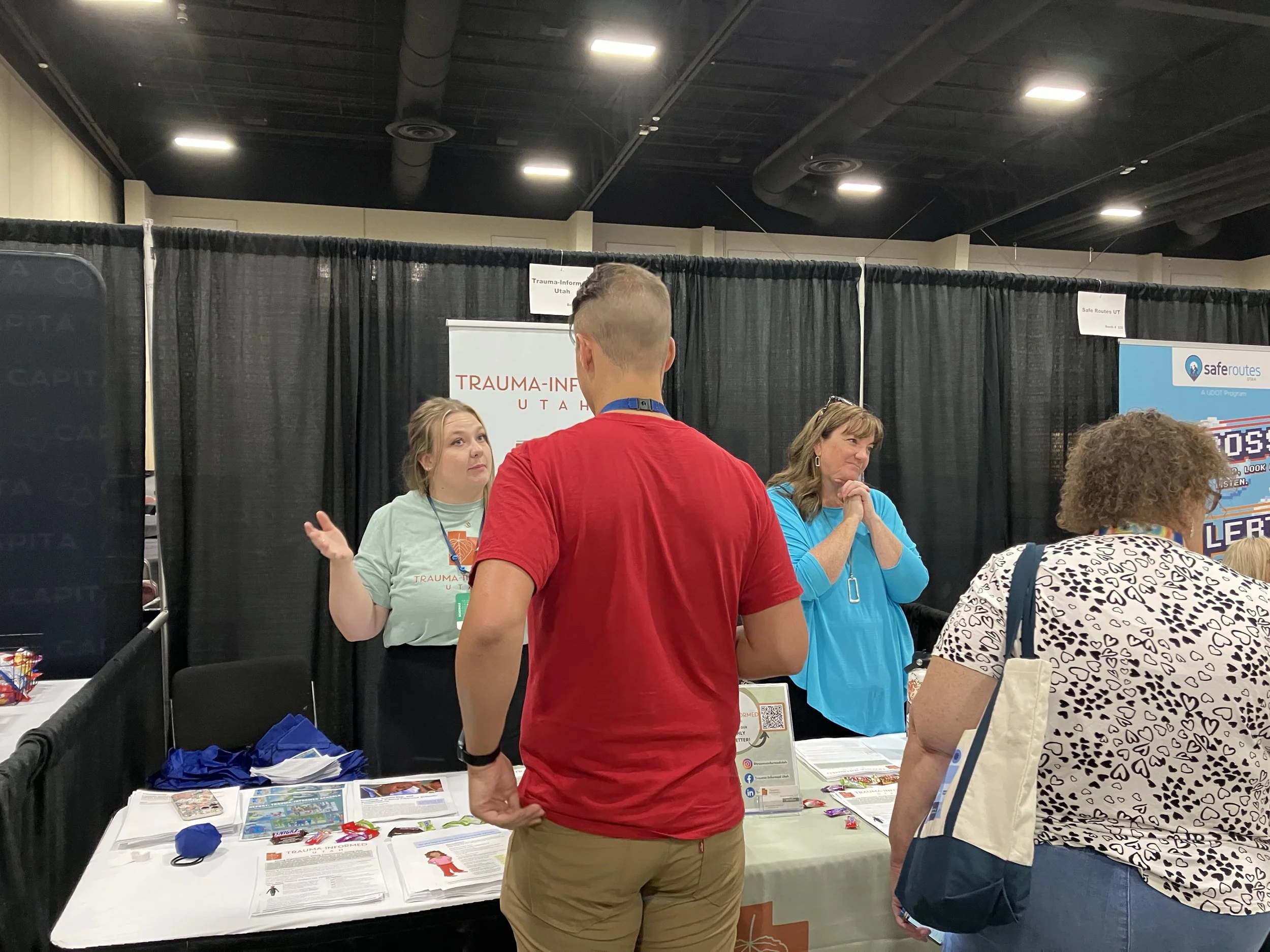
The truth is, there are really simple ways we can acknowledge and address individual adversity and how it shows up at work, but we have to be intentional about the design and the follow-through. Employees certainly have significant individual responsibility regarding their own wellness and emotional intelligence practices. However, organizations and businesses can also play a critical role in setting up workplace and educational environments for success by reinforcing a culture that consistently reflects trauma-informed principles of wellness for all.
The Substance Abuse and Mental Health Services Administration (SAMHSA) outlines six key principles for designing trauma-informed organizations or systems. These include: Safety, Trustworthiness and Transparency, Peer Support, Collaboration and Mutuality, Empowerment, Voice and Choice, and Cultural, Historical and Gender Issues. (SAMHSA, 2014) To incorporate each of the principles, an organization should reflect on:
-
How can we ensure physical and psychological safety for individuals and staff? This includes creating secure and accessible environments, establishing policies that allow for honest feedback without retribution, and funding to maintain safe facilities.
-
How can we establish and reinforce open communication across all levels of the organization? This includes being transparent about decision-making, even when an unpopular decision happens. Getting to understand the why builds trust even when individuals don’t agree.
-
How can we ensure individuals have safe spaces and language to ask for and receive support from their peers? This can include offering opportunities for peer-to-peer support or debriefing opportunities, and shared language and tools for accessing support.
-
How can we foster a collaborative environment where all voices are heard and valued? This includes promoting shared decision-making where appropriate, and recognizing the life experiences and expertise that all parties bring to the process.
-
How do we honor individual strengths, and provide choices and autonomy where possible? This includes ongoing opportunities for staff to provide feedback around decisions and processes that affect them.
-
How can we recognize, understand, and better appreciate the variety of experiences people of different cultures and genders bring? This can involve providing a culturally sensitive framework and being mindful of systemic issues that have a disproportionate impact on different populations.
Don’t let it overwhelm you! There are a few specific places you could start:
Start with an employee wellness committee composed of people from across the organization! Initiatives designed by employees themselves have more investment.
Do you have an employee satisfaction survey? When was the last time you reviewed it? Incorporated feedback? Communicated the “how, the why, and the why not now” back to staff? If you don’t have a current survey, the design could be a great first task of your employee wellness committee to construct in partnership with Human Resources.
Implement an EAP program, or if already implemented, ask your EAP provider about their resources available to team members. In addition to mental health support for employees, many EAP providers have access to management training, coaching around difficult situations, and ways to design individual growth plans that reflect individual mental health needs.
Review your employee benefits for equity and accessibility for all. Many companies find they don’t need to add more benefits, but that employees are looking for flexibility around planned days off and schedules, and in choosing the benefits that apply most to their situation.
Consider hosting an organization-wide training on Trauma Awareness, trauma-informed organizational development, and Secondary Traumatic Stress to learn how to understand these elements and how they may show up in your environment.
Small but intentional shifts in employee wellness initiatives can have a worthwhile and constructive impact - and there is evidence to support this claim. Data suggests that trauma-informed approaches improve employee well-being and reduced burnout (Elisseou, 2023), enhanced organizational productivity (SAMHSA, 2014), can provide a reduction in workplace conflicts (University at Buffalo School of Social Work, 2019), increase retention (NCTSN, 2018), and enhanced client outcomes in sectors like healthcare and social services (Wilson, C., Pence, D.M., & Conradi, L., 2013).
We can build skills, create policies and practices, and provide support to people in ways that allow everyone to work through these challenges - not just quit or get pushed out. Randy has a lot to offer! With access to an EAP program, he can get connected with someone to help him navigate the impact of his traumatic experience. (Can he even go to the appointment without having to take leave time? maybe!) Lisa is a great supervisor, and she has a lot on her plate. Is it safe for her to be open with her supervisor about some of what is happening at home? No one can fix it for her, but gaining peer support can make all the difference.
This approach, a trauma-informed approach, benefits everyone, regardless of our past, our present, or our future. It's a win-win!
